Motorcycle SVG, DXF, EPS, JPG, and PNG Files: A Versatile Digital Asset for Designers and Creators
Whether you're a graphic designer, an illustrator, or someone looking to enhance your digital projects, having access to high-quality motorcycle vector and raster files can be a game-changer. Motorcycle SVG, DXF, EPS, JPG, and PNG files offer flexibility and precision for a wide range of creative applications. This article explores what these files are, how they can help you achieve your design goals, and the practical ways in which they can be used across different industries.
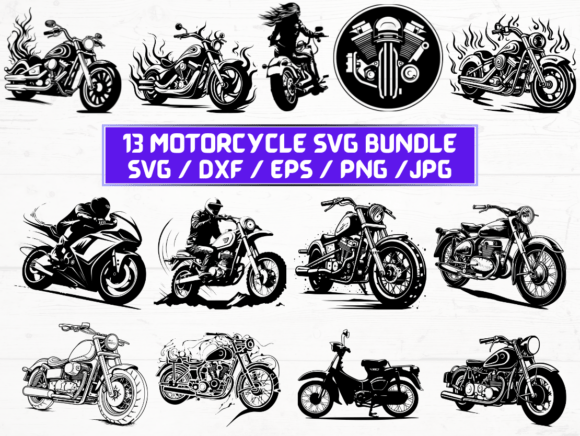
This listing includes 5 files in a ZIP folder, providing instant download access to 13 SVG files, 13 PNG files (300 dpi with transparent backgrounds), 13 DXF files, 13 JPG files, and 13 EPS files. These digital files are perfect for anyone who needs a versatile motorcycle illustration that can be adapted for various purposes, from print to digital media.
Understanding the File Formats
Before diving into the uses of motorcycle illustrations, it's important to understand the different file formats available:
- SVG (Scalable Vector Graphics): Ideal for web use, logos, and illustrations that need to scale without losing quality.
- PNG (Portable Network Graphics): Offers high-quality images with transparency, making them suitable for digital designs and social media content.
- JPG (Joint Photographic Experts Group): Best for photographs and complex images where file size is a concern.
- DXF (Drawing Exchange Format): Commonly used in CAD software, ideal for engineering drawings and manufacturing processes.
- EPS (Encapsulated PostScript): A vector format that supports both bitmap and vector data, often used in professional printing and publishing.
Each format has its own strengths and is suited for different tasks. Knowing when to use each one can significantly improve the outcome of your design project.
Challenges and Goals in Using Motorcycle Files
Designers and creators often face challenges such as finding high-quality motorcycle illustrations that are compatible with their preferred software or platforms. Additionally, ensuring that the files are scalable, editable, and printable without loss of quality can be a hurdle.
The goal of using motorcycle SVG, DXF, EPS, JPG, and PNG files is to provide a solution that meets these needs. Whether you're creating promotional materials, designing merchandise, or working on a digital project, these files can be tailored to fit your specific requirements.
Practical Applications of Motorcycle Files
The versatility of motorcycle vector and raster files makes them suitable for a variety of applications:
- Graphic Design: Use SVG and PNG files to create logos, banners, and illustrations for websites, marketing campaigns, and social media posts.
- Print Media: EPS and JPG files are excellent for high-resolution prints, including posters, flyers, and product packaging.
- CAD and Manufacturing: DXF files are commonly used in engineering and manufacturing for precise technical drawings and blueprints.
- Digital Art: PNG and SVG files can be used in digital art projects, animations, and interactive media where scalability and clarity are essential.
These applications demonstrate how motorcycle files can be integrated into different workflows, offering a valuable resource for professionals and hobbyists alike.
How Different Users Can Approach the Topic
Depending on the user's background and needs, the approach to using motorcycle SVG, DXF, EPS, JPG, and PNG files can vary. For example:
- Graphic Designers: May focus on using SVG and PNG files for web-based projects, ensuring compatibility with design tools like Adobe Illustrator and Photoshop.
- Manufacturers: Might prioritize DXF files for integration with CAD software, allowing for accurate production of motorcycle-related components.
- Content Creators: Could utilize JPG and PNG files for social media posts, blogs, and video thumbnails, leveraging high-quality visuals to engage audiences.
Regardless of the user's role, the key is to choose the right file format based on the intended use and desired outcome.
Useful Considerations for Working with Motorcycle Files
To get the most out of motorcycle SVG, DXF, EPS, JPG, and PNG files, consider the following tips:
- Check Software Compatibility: Ensure that the chosen file format is supported by your design or editing software.
- Optimize for Purpose: Select the appropriate resolution and format based on whether the final output will be digital or printed.
- Preserve Transparency: When using PNG files, ensure that transparency is maintained for layered designs and overlays.
- Scale Appropriately: Vector formats like SVG and EPS allow for easy scaling without loss of quality, but raster formats like JPG and PNG require careful handling to avoid pixelation.
By keeping these considerations in mind, you can effectively leverage motorcycle files to meet your design and project goals.
In conclusion, motorcycle SVG, DXF, EPS, JPG, and PNG files are powerful digital assets that cater to a wide range of creative and professional needs. Whether you're designing for the web, preparing for print, or working on a manufacturing project, these files provide the flexibility and quality required to deliver exceptional results. With instant access to 13 files in each format, this digital product offers a comprehensive solution for anyone seeking to incorporate motorcycle imagery into their work.