Everything You Need to Know About Anchor SVG, DXF, EPS, JPG, and PNG Files
In today's digital world, having the right file formats is essential for designers, crafters, and businesses. Whether you're creating logos, illustrations, or printable designs, understanding the different file types can make all the difference in quality and compatibility. In this article, we'll explore what Anchor SVG, DXF, EPS, JPG, and PNG files are, their uses, and why they matter—especially when you receive a downloadable package containing these formats.
What Are SVG, DXF, EPS, JPG, and PNG Files?
Each of these file formats serves a unique purpose, and knowing the differences between them will help you choose the best one for your needs.
SVG: Scalable Vector Graphics
SVG stands for Scalable Vector Graphics. These are vector-based image files that use mathematical formulas to define shapes, lines, and colors. Because of this, SVG files are resolution-independent, meaning they can be scaled up or down without losing quality. They are widely used in web design, animations, and digital illustrations.
SVG files are also editable with software like Adobe Illustrator or free tools like Inkscape. Their small file size and high quality make them ideal for online use, such as website icons, logos, and interactive graphics.
DXF: Drawing Exchange Format
DXF is short for Drawing Exchange Format, and it's primarily used in computer-aided design (CAD) software. It was developed by Autodesk to allow data exchange between different CAD programs. If you're working on architectural blueprints, engineering drawings, or 3D models, DXF files are a common format.
DXF files are especially useful for laser cutting, CNC machining, and other precision manufacturing processes. They preserve detailed information about dimensions, layers, and objects, making them reliable for technical applications.
EPS: Encapsulated PostScript
EPS stands for Encapsulated PostScript. This format is used for high-quality vector images and is often preferred for print media. Like SVG, EPS files are scalable and maintain crisp edges even when enlarged. However, unlike SVG, EPS files are based on PostScript language, which makes them more compatible with traditional printing workflows.
EPS files are commonly used in graphic design for logos, illustrations, and other materials that require professional-grade printing. They are also widely supported by most design software, including Adobe Illustrator and CorelDRAW.
JPG: Joint Photographic Experts Group
JPG, or JPEG, is a raster image format that uses compression to reduce file size. This makes it perfect for photographs and complex images with many colors and gradients. However, because JPG is a compressed format, it can lose quality when resized or edited repeatedly.
JPG files are ideal for web use, social media posts, and general image sharing. They are not suitable for logos or illustrations that need to be scaled without losing clarity, but they are excellent for photos and realistic images.
PNG: Portable Network Graphics
PNG stands for Portable Network Graphics. Like JPG, it's a raster format, but it supports transparency and higher color depth. PNG files are great for images that require a transparent background, such as logos, icons, and web graphics.
One of the key advantages of PNG is its lossless compression, which means the image quality remains intact even after multiple edits. This makes it a popular choice for digital artists, web developers, and anyone who needs high-quality images with transparency.
Why You Might Need All These File Formats
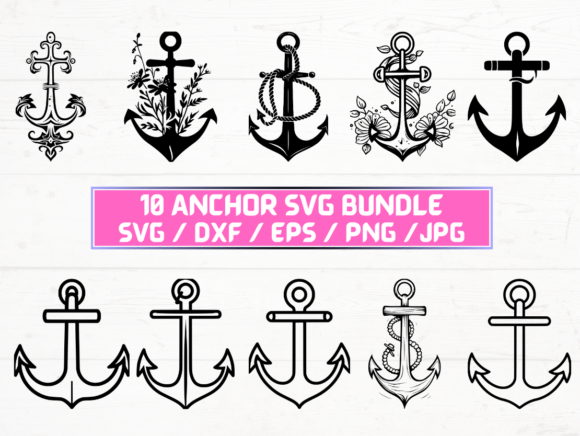
If you're receiving a downloadable package with 10 SVG, 10 PNG, 10 DXF, 10 JPG, and 10 EPS files, you're getting a comprehensive set of assets that cater to various needs. Let's take a closer look at how each format might be useful in different scenarios.
Designing for the Web
If you're designing for the web, SVG and PNG files are your go-to choices. SVGs are perfect for logos and icons that need to scale without losing quality, while PNGs are great for images that require transparency, such as buttons, banners, or illustrations.
JPG files are also useful for photographs or images with complex details that don't need transparency. They are smaller in size, which helps improve website loading times.
Printing and Graphic Design
For print projects, EPS files are often preferred due to their high quality and compatibility with traditional printing equipment. SVG files can also be used for print, but they may need conversion to EPS or PDF for certain printers.
PNG files can be used for print if transparency is required, but keep in mind that some printers may not support transparent backgrounds. In such cases, converting PNGs to JPEG or EPS might be necessary.
Crafting and Manufacturing
If you're into crafting or manufacturing, DXF files are essential. These files can be used with laser cutters, CNC machines, and 3D printers to create precise cuts and designs. DXF files ensure that every detail is preserved during the manufacturing process.
SVG files can also be used for cutting or engraving with some machines, but DXF is typically the preferred format for industrial applications.
Understanding the Package You're Getting
The product you're downloading includes a ZIP folder with five file types: SVG, DXF, EPS, JPG, and PNG. Each of these comes in ten versions, giving you flexibility in how you use the designs.
Instant Download: As mentioned in the product description, this is a digital product, so no physical item will be sent to you. Once you complete your purchase, you'll receive an email with a link to download the ZIP file immediately.
Transparent Backgrounds: The PNG files included come with transparent backgrounds, which is ideal for overlaying images on websites, apps, or other digital platforms. This feature allows for greater design flexibility.
High Resolution: The PNG files are provided at 300 dpi, which is the standard resolution for print. This ensures that your designs look sharp and clear whether you're using them online or in print.
Common Misconceptions About File Formats
There are several misconceptions about these file formats that can lead to confusion. Let's address a few of them.
- SVG vs. PNG: Many people think SVG is only for simple shapes, but it can actually handle complex illustrations and animations. On the other hand, PNG is better for images with transparency and rich color details.
- JPG vs. PNG: Some believe that JPG is always better for photos, but PNG is actually superior when transparency is needed. JPG should be used for images where file size matters more than transparency.
- DXF vs. SVG: While both are vector formats, DXF is more suited for technical drawings and manufacturing, whereas SVG is better for web and graphic design.
How to Use These Files Effectively
Now that you understand the different file formats, here's how you can use them effectively:
- Web Design: Use SVG and PNG files for logos, icons, and illustrations. JPG files are great for photographs.
- Print Projects: Choose EPS or high-resolution PNG files for professional printing. Make sure to check if your printer supports transparent backgrounds.
- Crafting and Manufacturing: Use DXF files for laser cutting, engraving, or 3D printing. Ensure your machine is compatible with DXF before proceeding.
- Graphic Design: Combine SVG, EPS, and PNG files to create layered designs that work across different mediums.
Conclusion
Having access to multiple file formats like SVG, DXF, EPS, JPG, and PNG gives you the freedom to use your designs in a variety of ways. Whether you're working on a website, a print project, or a crafting endeavor, choosing the right format is crucial for achieving the best results.
By understanding the strengths and limitations of each format, you can make informed decisions about how to use your designs. Remember, this is a digital product, so you'll get instant access to all the files once you've made your purchase. Happy designing!